
Imported Goods Seized and Destroyed because of a Non-Compliant Route: Who Should Bear the Loss? [Won Case]
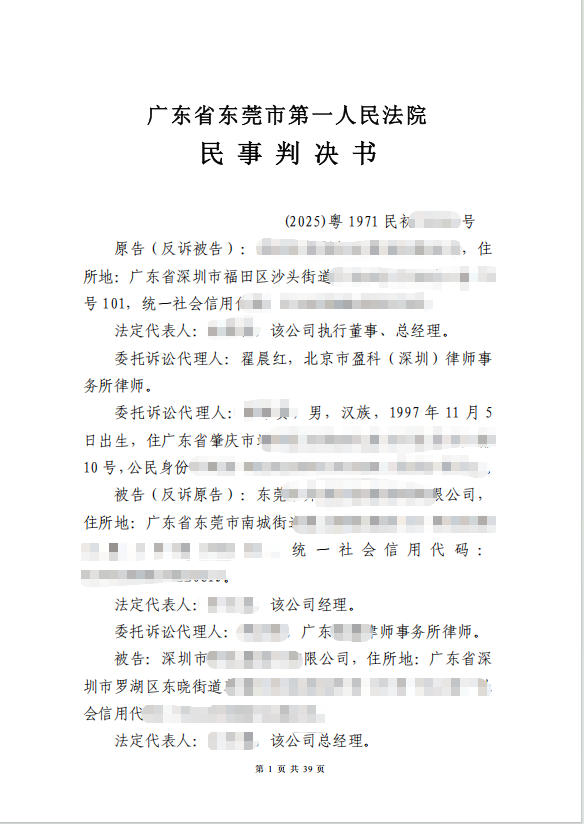
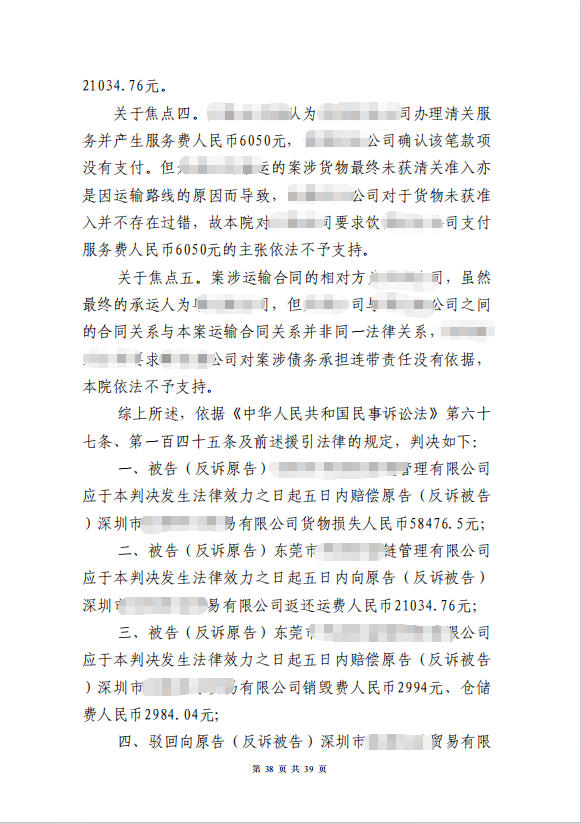
Outcome: The court ordered the freight forwarder to pay RMB 58,476.5 for the loss of the goods and to refund RMB 21,034.76 in freight, together with RMB 2,994 in destruction costs and RMB 2,984.04 in storage costs, and dismissed its counterclaim in full
Region: Dongguan, Guangdong Province | Deciding body: First People's Court of Dongguan | Cause of action: Foreign-related transport contract disputePeriod: 2025-2026 | Attorney: Zhai Chenhong, Yingke Law Firm (Shenzhen) | Party: A Shenzhen trading company (name changed)
1. Background
The client was a Shenzhen trading company engaged in the import of Japanese craft beer. At the end of April 2025 it entered into a cooperation with a supply chain management company in Dongguan, which was to provide end-to-end logistics services covering collection overseas, booking, import carriage, customs declaration and inspection.
After the goods left Japan, because the transport route passed through a radiation-controlled area, they were refused entry on inspection and quarantine at Shenzhen Bao’an Airport and had to be destroyed; the goods were ultimately destroyed on the spot. The client disputed this and instructed Zhai Chenhong of Yingke Law Firm (Shenzhen) to bring proceedings before the First People’s Court of Dongguan against both the freight forwarder and the customs broker which had actually carried the goods, seeking compensation. The other side counterclaimed for its service fees.
2. Key difficulties and issues in dispute
The case was difficult and raised numerous issues.
The freight forwarder had not affixed its seal to the Import Agency Agreement and argued on that basis that no agreement had been formed and that it bore no liability.
The forwarder argued that the salesperson who had actually handled the matter had acted privately, on his own account, and that this had nothing to do with the company.
The customs broker which performed the carriage argued that the route had been arranged by the forwarder, that it was responsible only for carriage, and that it should not be jointly liable.
The forwarder raised defences such as the importer having chosen a non-compliant route in order to keep costs down, and the expected profit not having been net of costs, and brought a counterclaim.
In summary, the issues in dispute were: who the counterparty was; whether the forwarder should compensate the various losses; whether the freight should be refunded; whether the importer should pay the service fees; and whether the customs broker should be jointly liable.
3. Counsel’s approach
Use apparent agency to fix the liable party: rely on the salesperson’s business card, a quotation bearing the company’s name, the text of the Import Agency Agreement, and the fact that company staff had received the agreement and reviewed it a second time, to argue that the importer had reason to believe that the salesperson was transacting on the company’s behalf.
Reinforce formation of the contract by conduct: argue that although the agreement was not sealed, the parties had formed a contractual relationship by performance, and rely on the fact that the company’s staff had confirmed the transport documents in writing to rebut the assertion that the company knew nothing about the transaction.
Build the evidential chain for the losses: match invoices, remittance vouchers, customs declarations, inspection and quarantine notices, destruction applications and certificates, and payment vouchers item by item to the loss of the goods, the freight, the destruction costs and the storage costs.
Narrow the claim of counsel’s own motion: as to the expected profit, which lacked any basis in cost accounting, prepare a fallback position and focus the claim on direct losses fully supported by vouchers, so that a failure of proof on one head would not undermine the claim as a whole.
4. The court’s findings
On the counterparty: taking together the account-based communications, the business card showing the salesperson to be a business specialist of the company, the quotation bearing the company’s name and the agreement bearing the company’s name, the court found that the importer had reason to believe that the salesperson was transacting on the company’s behalf and, under Article 172 of the Civil Code, that the counterparty to the transaction was the freight forwarder.
On the losses: the court accepted the contention that the goods had failed to clear customs because the transport route passed through a radiation area, and found that the forwarder, as the counterparty to the transport contract, had failed to complete its transport obligation, so that the purpose of the contract could not be achieved and the goods were destroyed; it should accordingly compensate the loss of the goods together with the destruction and storage costs.
On the freight: the court held that the importer had dealt with the forwarder and paid into an account designated by the forwarder, and that the goods had ultimately not been imported; the forwarder should therefore refund the freight.
On the counterclaimed service fees: the court held that the goods had been refused entry through no fault of the importer, and the claim was not supported.
On the expected profit: the court held that some of the order forms did not correspond to the payment receipts, and that the importer had not informed the forwarder that the goods had already been sold on, so that the specific use and the sale were not foreseeable to the forwarder; the claim was refused under Article 584 of the Civil Code.
On joint liability: the court held that the contractual relationship between the forwarder and the customs broker and the transport contract in issue in these proceedings were not the same legal relationship, and the claim was not supported.
5. Outcome
The court ordered: (1) the freight forwarder to pay RMB 58,476.5 for the loss of the goods; (2) to refund RMB 21,034.76 in freight; (3) to pay RMB 2,994 in destruction costs and RMB 2,984.04 in storage costs; (4) the importer’s other claims in the principal action to be dismissed; and (5) the forwarder’s counterclaim to be dismissed in its entirety. The case acceptance fee and the pre-action property preservation fee were shared in proportion to liability.
6. Practical advice for importing businesses
Always obtain a sealed contract: in this case liability was established through apparent agency, but the process was convoluted. Companies should insist on a company seal and a cross-page seal, and verify that the signing entity matches the business licence.
Confirm the key milestones in writing: ask the counterparty to confirm in writing the transport route, the airport of departure, the customs documents and other key matters, and keep the record, so that responsibility can be traced directly if something goes wrong.
Check compliance before shipment: for imports of food, agricultural products and the like, confirm in advance whether the transport route and the place of origin engage quarantine controls, and prepare documents such as a certificate of compliance for radiological testing.
Fix the loss vouchers immediately: once goods have been seized, the contracts, invoices and payment vouchers for destruction costs, storage costs and similar expenses should be obtained and preserved promptly, failing which the claim is very likely to be refused for lack of evidence.
Frequently asked questions on import transport contract disputes
If goods are seized because the transport route was non-compliant, must the freight forwarder pay?
Yes. A forwarder which accepts an entrustment for end-to-end logistics services owes a duty of prudent care as to the compliance of the transport route. Here the court found that it had failed to complete its transport obligation so that the purpose of the contract could not be achieved, and ordered it to compensate the loss of the goods and the destruction and storage costs and to refund the freight.
If the contract was not sealed, can the company still be held liable?
Possibly. If the person who acted had no authority but the counterparty had reason to believe that he did, apparent agency may be established under Article 172 of the Civil Code and the act of agency is effective. Here the business card, the quotation on the company’s letterhead, and the receipt and review of the documents by company staff established that the company was the counterparty to the contract.
Why was the claim for loss of expected profit not upheld?
Because the foreseeability rule was not satisfied. Under Article 584 of the Civil Code, the compensation may not exceed the loss which the breaching party foresaw or ought to have foreseen at the time of contracting. Here the importer had not informed the forwarder that the goods had been pre-sold, and some order forms did not correspond to the payment receipts, so the court did not allow the claim.
How is liability divided between the customs broker and the freight forwarder?
They belong to different legal relationships. Here the court found that the contractual relationship between the customs broker and the forwarder and the transport contract between the importer and the forwarder were not the same legal relationship, so the customs broker was not jointly liable; the importer’s claim lay against the forwarder as its contractual counterparty.
Can the costs of customs destruction of the goods be claimed?
Yes, but it must be shown that the costs were actually incurred and that they were causally connected to the breach. Here the destruction costs and storage costs were supported by the destruction application, the destruction certificate, the payment vouchers and the transfer records, and the court allowed them.
Imported goods seized and destroyed?
Freight forwarder liability · Cargo loss claims · Defending counterclaims · Nationwide practice
Tel / WeChat · +86 137 1519 9051
Email | yaozongxun@yingkelawyer.com
Facing a legal issue? Explain your situation clearly first — then decide whether you need a lawyer.
Criminal cases turn on evidence and timing; divorce and family matters on property and children; commercial disputes on contracts and performance. Different situations call for very different approaches.
Tell us the type of case, the amount involved, and where things stand — and we'll give you a free initial assessment.
E-mail: yaozongxun@yingkelawyer.com Consultation WeChat: 13715199051